
Introduction
Pressing is one of the most critical stages in plywood manufacturing. It transforms multiple glued veneer sheets into a strong, stable, and durable engineered wood panel. While veneer quality and adhesive selection are essential, the pressing process ultimately determines whether the adhesive cures correctly and whether the finished plywood achieves its designed mechanical properties.
Modern plywood production generally includes two consecutive pressing stages:
- Cold Pressing (Pre-Pressing)
- Hot Pressing (Final Pressing)
Although both use hydraulic pressure, they serve entirely different purposes. Some new buyers mistakenly believe that either process can replace the other. In reality, they complement one another, and both contribute significantly to production efficiency and finished product quality.
This article explains the differences between cold press and hot press systems, compares their advantages and limitations, and discusses how proper maintenance improves production reliability.
1. Overview of the Pressing Process
After veneers are dried, graded, and coated with adhesive, they are stacked into a plywood lay-up.
The pressing sequence typically follows:
- Veneer Assembly
- Cold Press
- Hot Press
- Cooling
- Trimming
- Sanding
Each pressing stage performs a unique function before the next manufacturing step begins.
2. What Is a Cold Press Machine?
A cold press machine applies hydraulic pressure at room temperature without heating the veneer stack.
Its primary purpose is to compress the glued veneers into a stable panel before hot pressing.
Cold pressing does not fully cure the adhesive.
Instead, it:
- Removes trapped air
- Improves contact between veneer layers
- Prevents veneer displacement
- Produces a stable panel for transportation into the hot press
Main Components
Typical cold press equipment includes:
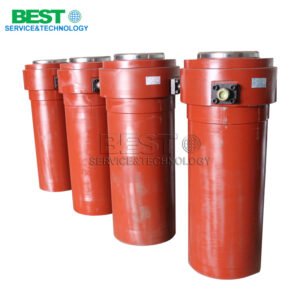
- Hydraulic cylinders
- Hydraulic power unit
- Steel frame
- Press platen
- Control system
- Pressure sensors
Typical Working Conditions
| Parameter | Typical Range |
|---|---|
| Temperature | Ambient |
| Pressure | According to panel specifications |
| Pressing Time | Several minutes depending on adhesive and panel thickness |
3. What Is a Hot Press Machine?
A hot press machine combines hydraulic pressure with controlled heat to permanently cure the adhesive between veneer layers.
Heat activates the resin, while pressure ensures close contact between veneers.
The result is a strong, permanent bond.
Without hot pressing, conventional plywood adhesives such as UF, MUF, or PF resin cannot develop their designed strength.
Main Components
A hot press usually includes:
- Heated steel platens
- Hydraulic cylinders
- Heating system
- Temperature controller
- Hydraulic station
- Control cabinet
- Pressure monitoring system
Typical Working Conditions
| Parameter | Typical Range |
|---|---|
| Temperature | 110–160°C |
| Pressure | According to product requirements |
| Pressing Time | Depends on panel thickness and adhesive type |
4. Cold Press vs Hot Press: Main Differences
| Feature | Cold Press | Hot Press |
|---|---|---|
| Temperature | Ambient | Heated |
| Adhesive Curing | No | Yes |
| Main Purpose | Pre-pressing | Final bonding |
| Production Stage | Before hot press | Final pressing |
| Bonding Strength | Temporary | Permanent |
| Equipment Complexity | Lower | Higher |
| Energy Consumption | Lower | Higher |
The table illustrates that the two machines perform different but complementary functions.
5. Advantages of Cold Pressing
Improved Veneer Alignment
Cold pressing prevents veneer sheets from shifting during handling.
Better alignment produces:
- Uniform panel dimensions
- Consistent thickness
- Improved appearance
Reduced Air Pockets
Hydraulic pressure removes trapped air between veneer layers.
Benefits include:
- Better adhesive contact
- Improved bonding quality
- Reduced delamination risk
Increased Production Efficiency
Because veneer stacks become stable after cold pressing, they can be transferred more efficiently to the hot press.
This reduces production interruptions.
Lower Stress During Hot Pressing
A pre-compressed panel requires less adjustment inside the hot press, improving production consistency.
6. Advantages of Hot Pressing
Permanent Adhesive Curing
The primary purpose of hot pressing is curing adhesive under controlled heat and pressure.
This creates:
- Strong bonding
- High structural integrity
- Long-term durability
Improved Mechanical Strength
Proper hot pressing improves:
- Bending strength
- Internal bond strength
- Screw holding capacity
- Impact resistance
Stable Panel Thickness
Controlled hydraulic pressure ensures:
- Uniform density
- Smooth surfaces
- Consistent thickness
Better Moisture Resistance
Correct curing improves the water resistance of the adhesive system, particularly when using MUF or PF resin.
7. Why Both Processes Are Necessary
Some small workshops attempt to skip cold pressing.
However, doing so may result in:
- Veneer movement
- Uneven glue distribution
- Air pockets
- Longer hot press cycles
- Lower product quality
Likewise, cold pressing alone cannot replace hot pressing because the adhesive remains uncured.
Professional plywood factories therefore use both processes together to achieve:
- Higher productivity
- Better bonding quality
- Lower defect rates
- Stable product performance
8. Common Problems in Cold Press Operation
Hydraulic Pressure Loss
Possible causes:
- Worn seals
- Hydraulic leakage
- Damaged valves
Regular seal replacement helps maintain stable pressure.
Uneven Pressure Distribution
Possible reasons:
- Frame deformation
- Cylinder problems
- Platen wear
Routine inspection is recommended.
Slow Hydraulic Response
Potential causes include:
- Oil contamination
- Pump wear
- Valve malfunction
Scheduled hydraulic maintenance reduces these risks.
9. Common Problems in Hot Press Operation
Uneven Heating
Causes include:
- Damaged heating plates
- Faulty temperature sensors
- Steam or oil circulation problems
This may cause inconsistent adhesive curing.
Hydraulic Leakage
Leaks reduce pressing pressure and affect product quality.
Inspection of cylinders and seals is essential.
Surface Thickness Variation
Possible reasons:
- Uneven platen pressure
- Hydraulic imbalance
- Improper machine calibration
Routine calibration maintains production accuracy.
10. Spare Parts That Affect Press Performance
Reliable spare parts play an important role in both machines.
Common replacement components include:
Hydraulic Cylinders
Provide stable pressing force.
Hydraulic Seals
Prevent oil leakage and pressure loss.
Hydraulic Valves
Control pressure and movement accurately.
Bearings
Support moving components.
Temperature Sensors
Ensure accurate heat control in hot presses.
Heating Platens
Maintain uniform temperature across the panel surface.
Control Components
Modern PLC systems improve production consistency and automation.
11. Preventive Maintenance Recommendations
A preventive maintenance program helps avoid unexpected downtime.
Daily
- Check hydraulic pressure
- Inspect for oil leaks
- Monitor abnormal noise
- Clean machine surfaces
Weekly
- Lubricate moving parts
- Inspect cylinders
- Check pressure gauges
Monthly
- Inspect seals
- Verify platen parallelism
- Test temperature sensors
- Examine hydraulic hoses
Annually
- Replace worn hydraulic components
- Calibrate pressure systems
- Inspect heating systems
- Perform complete equipment inspection
12. Choosing the Right Press Machine
When selecting equipment, manufacturers should consider:
Production Capacity
Large factories generally require multi-opening automatic hot press systems.
Product Type
Different plywood products require different pressing parameters.
Examples include:
- Construction plywood
- Furniture plywood
- Marine plywood
- Film-faced plywood
Automation Requirements
Modern presses may include:
- Automatic loading
- Automatic unloading
- PLC control
- Digital monitoring
Automation improves productivity and consistency.
Conclusion
Cold pressing and hot pressing are both indispensable processes in modern plywood manufacturing.
Cold pressing prepares the veneer assembly by stabilizing the panel and improving veneer contact, while hot pressing permanently cures the adhesive under carefully controlled temperature and pressure.
When combined with preventive maintenance and high-quality spare parts, these processes enable plywood manufacturers to produce panels with superior strength, dimensional accuracy, and long-term durability.
BS Wood Machine Spare provides reliable press machine spare parts and customized maintenance solutions to help plywood factories maximize equipment performance and production efficiency.
Categories
Recent Posts
Why Choose BS Wood Machine Spare?
BS Wood Machine Spare supplies professional spare parts and technical solutions for plywood press systems.
Our product range includes:
- Hot Press Machine Spare Parts
- Cold Press Machine Components
- Hydraulic Cylinders
- Hydraulic Seals
- Hydraulic Valves
- Bearings
- Heating Components
- Customized Mechanical Parts
We help plywood manufacturers improve:
- Equipment reliability
- Production efficiency
- Product quality
- Maintenance performance
- Long-term operating stability
Frequently Asked Questions (FAQ)
Technically yes, but product quality and production efficiency usually decrease. Most industrial production lines include cold pressing before hot pressing.
Heat activates the adhesive, allowing it to cure and create a permanent bond between veneer layers.
Hot presses consume considerably more energy because they operate at elevated temperatures while maintaining hydraulic pressure.
Replacement intervals depend on production volume, operating conditions, hydraulic oil quality, and preventive maintenance schedules.
Related Video
Related Products






Related Articles
Need Reliable Plywood Machinery Spare Parts?
BS Wood Machine Spare provides high-quality spare parts and professional solutions for plywood factories worldwide.