
Introduction
In modern plywood manufacturing, production efficiency depends on the smooth coordination of every process stage.
From log processing to final plywood finishing, materials must move continuously between different machines.
A typical plywood production line includes:
- Veneer peeling machines
- Veneer dryers
- Glue spreading machines
- Cold presses
- Hot presses
- Sanding systems
Between these machines, industrial conveyor systems play an essential role in transporting veneer materials safely and efficiently.
A reliable veneer conveyor system helps manufacturers achieve:
- Faster material movement
- Reduced manual handling
- Improved production consistency
- Lower labor costs
- Reduced material damage
For plywood factories operating large-scale production lines, conveyor equipment is not only a transportation solution but also a key factor affecting overall manufacturing efficiency.
This article explains how industrial conveyor systems improve veneer production performance and why high-quality conveyor components are important.
1. What Is a Veneer Conveyor System?
A veneer conveyor system is an industrial transportation system designed to move wood veneers between different processing stages.
Its main functions include:
- Feeding veneers into machines
- Moving dried veneer sheets
- Connecting production equipment
- Maintaining continuous workflow
Modern conveyor systems usually include:
- Conveyor belts
- Rollers
- Drive motors
- Chain systems
- Supporting frames
- Control components
These components work together to ensure stable material movement throughout the plywood manufacturing process.
2. The Importance of Conveyor Systems in Plywood Manufacturing
Without an efficient conveyor system, plywood production would require significant manual handling.
This creates several problems:
- Lower production speed
- Higher labor requirements
- Increased material damage
- Inconsistent processing
Industrial conveyor systems solve these problems by creating a continuous production flow.
2.1 Improve Production Speed
In large plywood factories, thousands of veneer sheets may be processed every day.
Manual transportation cannot match modern production requirements.
Automated conveyor systems provide:
✓ Continuous material movement
✓ Stable feeding speed
✓ Reduced production interruption
This allows factories to increase output capacity.
2.2 Reduce Veneer Damage
Veneer sheets are thin and sensitive.
Improper handling may cause:
- Cracking
- Breaking
- Edge damage
- Surface defects
A properly designed conveyor system provides:
- Smooth transportation
- Controlled movement
- Reduced impact
This improves material utilization and reduces waste.
2.3 Improve Worker Safety
Manual handling of large quantities of veneer creates safety challenges.
Automated conveyor systems reduce:
- Heavy lifting
- Repetitive handling tasks
- Workplace injury risks
This creates a safer production environment.
3. Main Types of Veneer Conveyor Systems
Different plywood factories require different conveyor designs.
3.1 Roller Conveyor Systems
Roller conveyors use rotating rollers to transport veneer materials.
Advantages:
- Simple structure
- Easy maintenance
- Stable transportation
Common applications:
- Veneer feeding systems
- Production transfer areas
- Sorting systems
Important components include:
- Conveyor rollers
- Bearings
- Drive systems
3.2 Mesh Belt Conveyor Systems
Mesh belt conveyors are widely used in veneer drying applications.
The belt structure allows:
- Better airflow
- Uniform drying
- Stable movement
Common components include:
- Teflon mesh belts
- Stainless steel mesh belts
- Drive rollers
These systems are especially important for veneer dryer machines.
3.3 Chain Conveyor Systems
Chain conveyors provide strong transportation capability.
They are suitable for:
- Heavy materials
- Continuous production environments
- Large industrial applications
4. Key Conveyor Components in Veneer Production
A conveyor system depends on multiple components working together.
4.1 Conveyor Belts
The conveyor belt is one of the most important parts.
A suitable belt should provide:
- Wear resistance
- Temperature resistance
- Stable operation
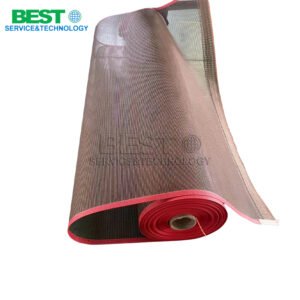
For veneer drying applications, Teflon mesh belts are commonly used because they can withstand high temperatures and provide excellent airflow.
4.2 Conveyor Rollers
Rollers support material movement and maintain transportation stability.
High-quality rollers provide:
- Accurate rotation
- Low vibration
- Long service life
Poor-quality rollers may cause:
- Belt deviation
- Increased wear
- Production interruption
4.3 Bearings
Bearings allow rollers to rotate smoothly.
Regular bearing inspection helps prevent:
- Overheating
- Noise problems
- Unexpected failure
4.4 Drive Systems
The drive system controls conveyor movement.
Important components include:
- Motors
- Gear reducers
- Chains
- Couplings
Stable drive performance ensures consistent production speed.
5. How Conveyor Systems Improve Veneer Dryer Performance
The veneer drying process requires stable transportation through high-temperature chambers.
The conveyor system affects:
- Drying uniformity
- Production speed
- Energy efficiency
Stable Veneer Positioning
A reliable conveyor keeps veneers properly positioned during drying.
This ensures:
- Even airflow exposure
- Consistent moisture reduction
- Better final plywood quality
Continuous Operation
Industrial plywood factories often operate multiple shifts.
Durable conveyor components reduce:
- Machine stops
- Maintenance frequency
- Production losses
6. Common Conveyor System Problems and Solutions
6.1 Belt Deviation
Causes:
- Incorrect alignment
- Uneven roller installation
- Belt tension problems
Solutions:
- Adjust roller position
- Check belt tension
- Inspect conveyor structure
6.2 Excessive Belt Wear
Causes:
- Poor-quality materials
- Incorrect operation
- Foreign objects
Solutions:
- Use suitable conveyor belts
- Perform regular inspection
- Replace damaged parts
6.3 Roller Failure
Causes:
- Bearing damage
- Lack of lubrication
- Long-term operation
Solutions:
- Regular lubrication
- Bearing replacement
- Roller inspection
7. Preventive Maintenance for Veneer Conveyor Systems
Regular maintenance improves reliability.
Daily Inspection
Check:
✓ Belt condition
✓ Abnormal noise
✓ Material movement
✓ Safety protection systems
Weekly Inspection
Check:
✓ Roller alignment
✓ Bearing condition
✓ Drive system
✓ Belt tension
Monthly Maintenance
Check:
✓ Conveyor structure
✓ Motor performance
✓ Electrical connections
✓ Replacement parts condition
8. Choosing the Right Conveyor Components Supplier
For plywood factories, selecting the right supplier is important.
A professional supplier should provide:
Technical Experience
Understanding of:
- Veneer production processes
- Conveyor applications
- Machine requirements
Quality Components
Including:
- Durable belts
- Precision rollers
- Reliable bearings
- Industrial drive components
Customized Solutions
Different factories may require:
- Different conveyor widths
- Special belt materials
- Customized structures
Professional suppliers can provide suitable solutions.
9. Future Development of Veneer Conveyor Systems
The plywood industry is moving toward higher automation levels.
Future conveyor systems will focus on:
Intelligent Control
Including:
- Automatic speed adjustment
- Sensor monitoring
- Production data collection
Higher Efficiency
Modern systems aim to achieve:
- Lower energy consumption
- Faster production
- Reduced maintenance
Better Material Handling
Advanced conveyor solutions will improve:
- Veneer quality
- Production consistency
- Factory automation
Conclusion
Industrial conveyor systems are essential components in modern plywood manufacturing.
A reliable veneer conveyor system improves:
✓ Production efficiency
✓ Material handling accuracy
✓ Worker safety
✓ Product quality
✓ Equipment reliability
From veneer peeling to drying and final processing, conveyor components directly influence the performance of the entire plywood production line.
Choosing high-quality conveyor parts and working with an experienced supplier helps plywood factories achieve stable, efficient, and long-term production.
BS Wood Machine Spare provides professional plywood machinery spare parts solutions, including conveyor components, veneer dryer parts, glue spreader machine parts, and customized industrial replacement components for global plywood manufacturers.
Categories
Recent Posts
Need Reliable Conveyor System Parts?
BS Wood Machine Spare supplies professional spare parts for plywood production lines worldwide.
Products include:
- Veneer conveyor system components
- Teflon mesh belts
- Conveyor rollers
- Veneer dryer machine parts
- Glue spreader machine parts
- Hot press machine components
Contact our technical team today for product recommendations and quotation.
Frequently Asked Questions (FAQ)
Because they provide continuous material movement between production stages, improving efficiency and reducing manual handling.
Teflon mesh belts are commonly used because of their high temperature resistance and excellent airflow performance.
Regular inspection helps identify problems early and prevents unexpected equipment failures.
Yes.
Professional suppliers can provide customized:
- Conveyor belts
- Rollers
- Drive components
- Mechanical structures
Yes. We support global shipment and provide professional export services for industrial customers.
Related Video
Related Products
Related Articles
Need Reliable Plywood Machinery Spare Parts?
BS Wood Machine Spare provides high-quality spare parts and professional solutions for plywood factories worldwide.